Restaurant marketing services for US restaurants
Restaurant marketing is the set of channels and tasks that decide how guests discover a restaurant, whether they book a table or place an order, and whether they return. As a restaurant marketing consultant, Vivek Bhargava plans and runs that work for restaurants across the United States. He starts with whichever part is losing the most tables.
The first call takes thirty minutes and shows which part of your marketing to fix first.
What restaurant marketing covers
Restaurant marketing covers five areas in PLATE, the framework Vivek Bhargava applies to restaurant engagements: Presence, Local, Attraction, Tables and Encore. Presence and Local decide whether guests find the restaurant online and on the map. Attraction creates demand for a chosen date, Tables turns that interest into bookings, and Encore brings guests back.
| Area | What it deals with | The question it settles | Where it is handled |
|---|---|---|---|
| Presence | The restaurant's online presence on delivery apps, review sites, directories and AI assistants | Do the sources guests read first carry accurate hours, a current menu and a working booking link? | The audit, in every engagement |
| Local | The Google Business Profile, map results and local SEO | Does the map pack show you to people within a short trip of your door? | Restaurant SEO |
| Attraction | Paid search, Facebook and Instagram campaigns, social media posts and offers | Can you create demand for a particular night, launch or event? | Google Ads and Meta Ads |
| Tables | Reservations, online ordering, online reviews and reputation | Does someone who wants to come in manage to book? | The audit, in every engagement |
| Encore | Email marketing, SMS, loyalty programs and referrals | Do guests who came once come back? | Scoped engagement by engagement |
How to market a restaurant: where to start
To market a restaurant, start from a problem you can already see in bookings, profiles or reviews, and work on the area behind it. Profile views without bookings point to Tables. A weak map position for your cuisine points to Local. Quiet weeknights point to Attraction or Encore, once kitchen capacity and demand on the street have been checked.
| What you see | Area | What gets checked first |
|---|---|---|
| Plenty of profile views and few bookings | Tables | The booking link on each listing, the reservation steps on a phone, and the time taken to answer calls and web enquiries |
| You rank for your own name, but not for your cuisine near the guest | Local | Primary category, attributes and food photos, and how your profile compares with the competitors closest to your guests |
| Friday and Saturday fill, while weekday lunch or two weeknights stay quiet | Attraction and Encore, sometimes pricing | Whether those service periods lack demand or lack a reason to visit, before any ad budget is committed |
| A good rating, but the newest reviews are months old | Tables | How often staff ask for reviews, who answers them, and how negative reviews are handled |
| Steady first visits and few repeat guests | Encore | Whether guest contact details are captured at all, and what is sent to those guests afterwards |
| A new location opening within months | Presence and Local | Profile, listings, online menu and booking links for the new site, set up during the fit-out |
| Delivery apps or Yelp still show last season's menu | Presence | Each aggregator and review profile, checked line by line against the current menu and opening hours |
A few of these turn out to be operating problems once the figures are open. When the kitchen is already at capacity on Friday and Saturday, extra demand on those nights lengthens ticket times without adding revenue. When a quiet night is quiet along the whole street, advertising has little demand to work with, and a change to hours or staffing may cost less. Vivek has run restaurants himself, so he raises these points on the first call rather than after a quarter of ad spend.
A restaurant marketing strategy built on kitchen capacity
A restaurant marketing strategy has a ceiling: the number of covers the kitchen and floor can serve well in each service period. Vivek Bhargava builds the strategy from that number. Spend goes to the shifts with spare capacity, and campaigns are narrowed or paused on nights that already sell out.
Offers are kept for the quiet service periods, because a discount on a night that sells out anyway gives away margin without adding covers. Each marketing channel is then chosen for the shift it has to fill, and the goal for that shift is set in covers.
The written plan
The plan follows the same order, from covers per shift to budget, channels, calendar and KPIs.
Restaurant marketing services
Restaurant marketing services from Vivek Bhargava come in three parts, each with its own page: restaurant SEO, Google Ads and Meta Ads. Restaurant SEO improves how guests find you in local search and on the map. Google Ads reaches people already searching, and Meta Ads uses paid social media to reach guests before they decide where to eat.
-
Restaurant SEO
Search work covers the Google Business Profile, map pack position, listings, organic search and what your website states about the menu, opening hours and reservations. It suits a restaurant that guests would choose if they could find it. The SEO page sets out what search can change, what it cannot, and when the money belongs elsewhere.
-
Google Ads for restaurants
Paid search puts your restaurant in front of high-intent searches, such as a cuisine close to the guest or a table for tonight. A campaign converts only as well as the landing page behind it, so the menu page and the booking page are fixed before budget is spent. It suits a restaurant whose guests are searching but booking somewhere else.
-
Meta Ads for restaurants
Facebook and Instagram campaigns reach people before they have decided to eat out. That makes paid social media the better fit for awareness around an opening, a new menu item, a seasonal menu or an event. Each campaign targets an audience within the area your guests travel from and is tied to a date you need to fill.
Online presence, reviews, ordering and repeat visits
Online presence, reviews, online ordering and repeat visits have no separate service pages, because restaurant SEO, Google Ads and Meta Ads all depend on them. Accurate listings give guests and AI assistants the right hours and menu. A working booking path turns interest into tables. Email, SMS and loyalty programs bring first-time guests back.
-
Delivery apps, review sites and AI assistants
Guests often meet your restaurant on DoorDash, Uber Eats, Yelp, Tripadvisor or Google Maps before they reach your restaurant website. AI assistants such as ChatGPT and Gemini draw on those same profiles, along with your online menu and your reviews, when they recommend a restaurant. The Presence work keeps hours, menu, photos and booking links identical across all of them.
-
Reviews, reservations and online ordering
The Tables work starts with the reservation flow and the online ordering link, tested on a phone the way a guest would use them. It also covers how quickly a call or a web enquiry gets an answer. On online reviews, the work sets how often staff ask for one, who replies, and how a negative review is answered in public. Recency carries weight with diners: BrightLocal's 2026 survey found that 74% of consumers limit their reading to reviews from the past three months.
Source: BrightLocal, Local Consumer Review Survey 2026 -
Email, SMS and loyalty programs
Encore work turns first visits into repeat business and customer loyalty through email marketing, SMS, a loyalty program or referrals. It starts with whether you capture guest details at all, through reservations, Wi-Fi sign-in or your point of sale. Once an email list exists, the messages are planned around the service periods you need to fill.
How restaurant marketing is measured
Restaurant marketing is measured by what reaches the restaurant: reservations, covers, online orders, calls and direction requests. Clicks, impressions and rankings are reported underneath, where they explain why bookings moved. The table lists each measure, where its figure comes from and how often it is tracked.
| Measure | Where it comes from | How often |
|---|---|---|
| Reservations and covers booked | Your reservation system | Weekly |
| Online orders | Your ordering platform | Weekly |
| Calls from your profile | Google Business Profile | Monthly |
| Direction requests | Google Business Profile | Monthly |
| Booking-link clicks | Google Business Profile and website analytics | Monthly |
| Map pack position by area | A grid check across the streets you draw from | Monthly |
| Review count, rating and recency | Google and Yelp | Monthly |
| Cost per booking from paid campaigns | Google Ads and Meta Ads, matched against your reservation system | Weekly while campaigns run |
Single restaurants and multi-location groups
Marketing a single restaurant and marketing a multi-location group differ in who approves the work and how the reporting is divided. A single site usually starts with the profile, the listings and the booking path. A group needs its own profile, reviews and search position for each location, and a report for each site.
A single restaurant
On a single site the owner often approves spend and answers reviews personally, so the plan is written to fit around service. Work tends to start with the profile, the listings and the booking path, because a fix there applies to every guest who finds you afterwards. You provide access to your Google Business Profile, your reservation system and any ad accounts.
A restaurant group with several locations
Each location needs its own profile, reviews and search position, while brand consistency holds across every site. The search set-up keeps each site to its own area, so two locations do not compete for the same guest. Reporting is split by location, so a strong site cannot hide a weak one. You provide one contact per location for hours and menus, and one person who approves spend across the group.
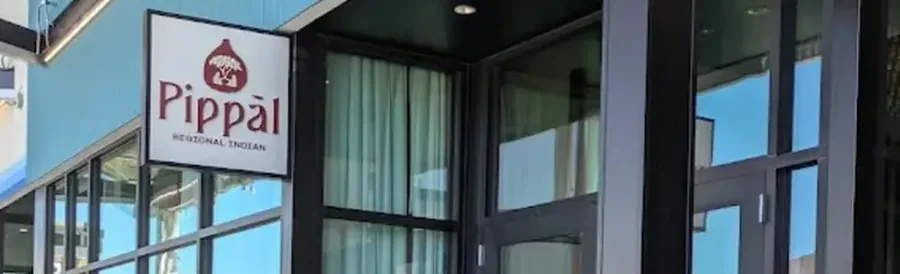
Pippal, which added a Dublin location to its Emeryville restaurant during the engagement, is one of the case studies below.
Restaurant case studies
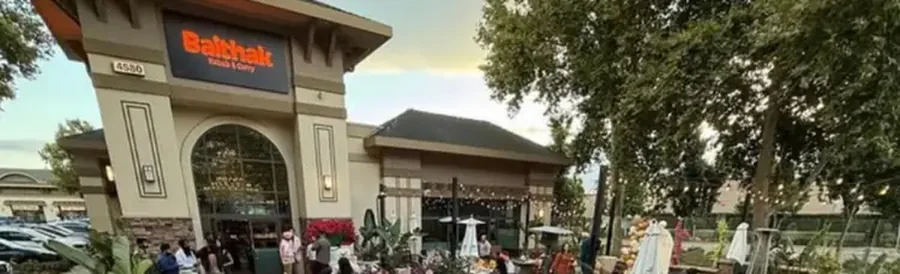
Three restaurants Vivek Bhargava works with have case studies. Alora is on San Francisco's Embarcadero, Pippal trades in Emeryville and added a Dublin site during the engagement, and Baithak is also in Dublin, California. Each case study describes the work done for that restaurant, and the photographs below show the venues themselves.
-

Alora
The Embarcadero, San Francisco -
Pippal
Emeryville, with a second site in Dublin -
Baithak
Dublin, California
Hotel marketing
Within hospitality, hotels need a different scope from restaurants, and PLATE does not apply to them. For a hotel or resort, the hotel marketing page covers search, paid campaigns and direct bookings.
Hotel marketingWorking with Vivek
Vivek works from India with restaurant owners across the United States, remotely and directly, and does the audit, the plan and the work himself. Every engagement begins with a thirty-minute call, followed by an audit and a written marketing plan that you approve before any work starts. The home page sets out the four stages of an engagement, from research to delivery.
About VivekFrequently asked questions about restaurant marketing
How do you market a restaurant?
Start with the places guests already look, which are your Google Business Profile, the delivery apps and the review sites. Make the hours, menu and booking links accurate on each one. Then fix the booking path, so that interest turns into tables. Paid campaigns and email come after that, aimed at the service periods with spare capacity.
What does a restaurant marketing consultant do?
A restaurant marketing consultant works out which part of your marketing is limiting bookings, writes the plan to fix it and, in Vivek's case, carries out the work. The starting point is the restaurant itself, so capacity by service period, average spend and the booking path come before any channel.
When is a marketing consultant the right choice for a restaurant?
A consultant suits an owner who wants one person to find the problem, set the order of work and answer for the result. With Vivek, the person on the first call is the person who does the work. A group that needs content and campaigns produced every week may need a larger team as well.
How do delivery apps fit into restaurant marketing?
Delivery apps are listings as well as a sales channel, and guests often see your delivery profile before your website. They need the same hours, menu and photos as everywhere else. Whether to push delivery orders or table bookings depends on the margin you keep on each, which is worth settling before any promotion runs.
Can marketing fill a quiet weeknight?
It can when the street around you is busy that night and your restaurant is not, because the gap is then visibility or a reason to visit. An offer, an event or a narrowly targeted campaign can close that gap. If the whole area is quiet, a change to opening hours, staffing or the menu for that service usually costs less.
Is restaurant marketing the same as restaurant consulting?
Restaurant consulting usually covers operations, such as menu engineering, kitchen systems, staffing and cost control. Restaurant marketing covers demand, meaning how guests find you, book and return. Vivek's work sits on the marketing side, with an operator's view of what the kitchen and floor can take.
Fill more tables. Know which marketing to fix first.
Work with a restaurant marketing consultant to find which of the five areas is losing you the most tables, and fix that one before the rest: local search, Google Ads, Meta Ads, reviews and repeat visits.